TULU.me - Shifting User Behavior
A two-week research sprint for TULU, a sharing-economy platform in residential buildings. What started as a brief about engagement and sustainability ended with a proposal to rethink the model entirely.
Overview
Project Motivation
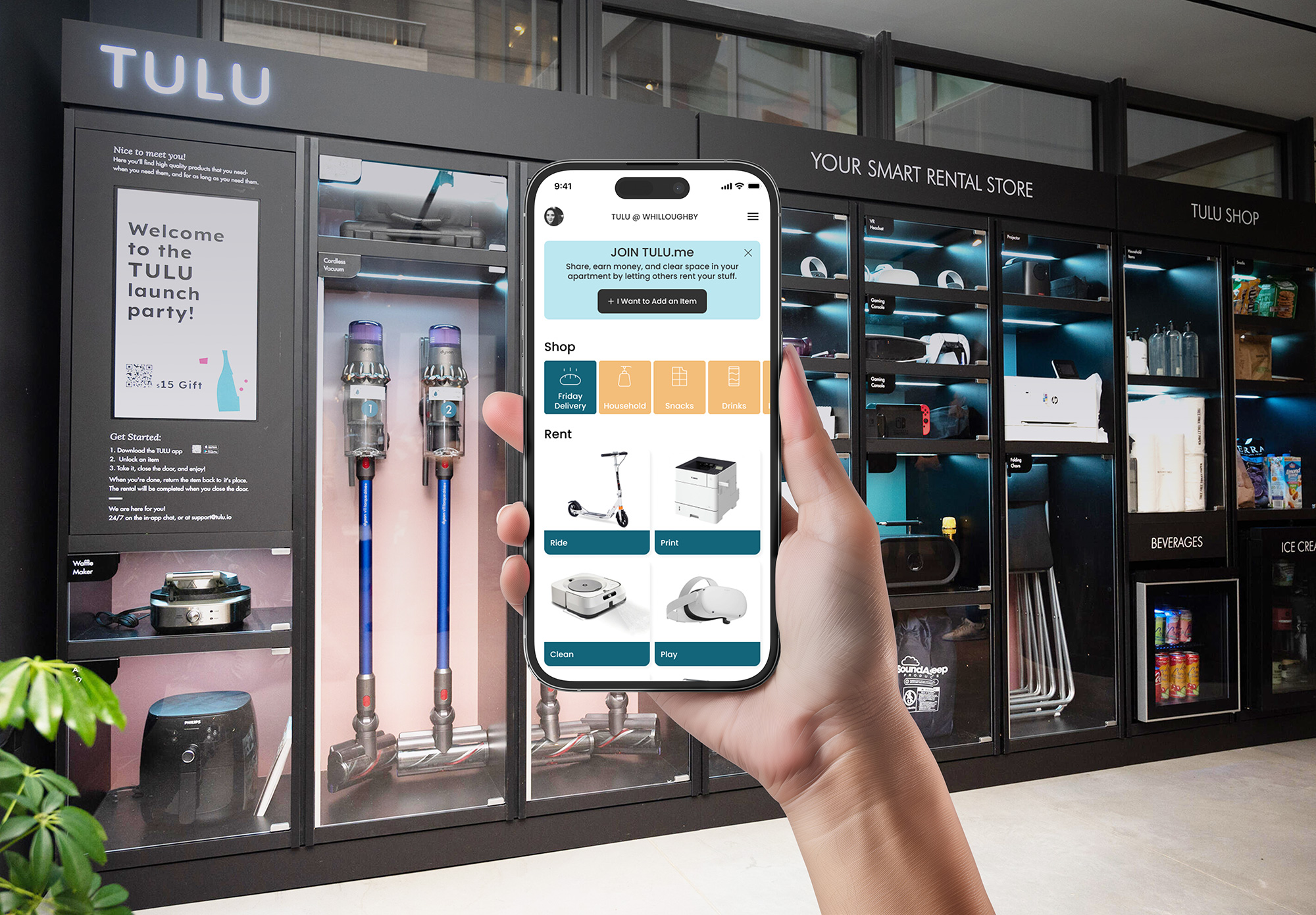
TULU puts shared appliances (from Dyson vacuums to KitchenAid mixers) in residential building lobbies. Residents pay per use rather than per ownership. The model was built on the idea that shared access beats personal ownership. Roughly 70% of residents in TULU-connected buildings never used it.
I worked on this as part of a team of five during a two-week HCI marathon. We were given an open brief: explore how TULU could support deeper user needs, things like sustainability, community, and thoughtful consumerism. The research took us somewhere the brief didn't anticipate.
The research challenged the brief more than it answered it.
Research
Combining Academic and Industry Research
We structured the process around the Double Diamond framework, moving from broad discovery into a focused direction. What we found in the first phase shifted what we were ultimately designing for.
Discover
- Literature review
- Psychology of sharing
- Benchmark research
- Competitive analysis
Define
- Survey — 150+ residents
- 6 qualitative interviews
- Thematic analysis
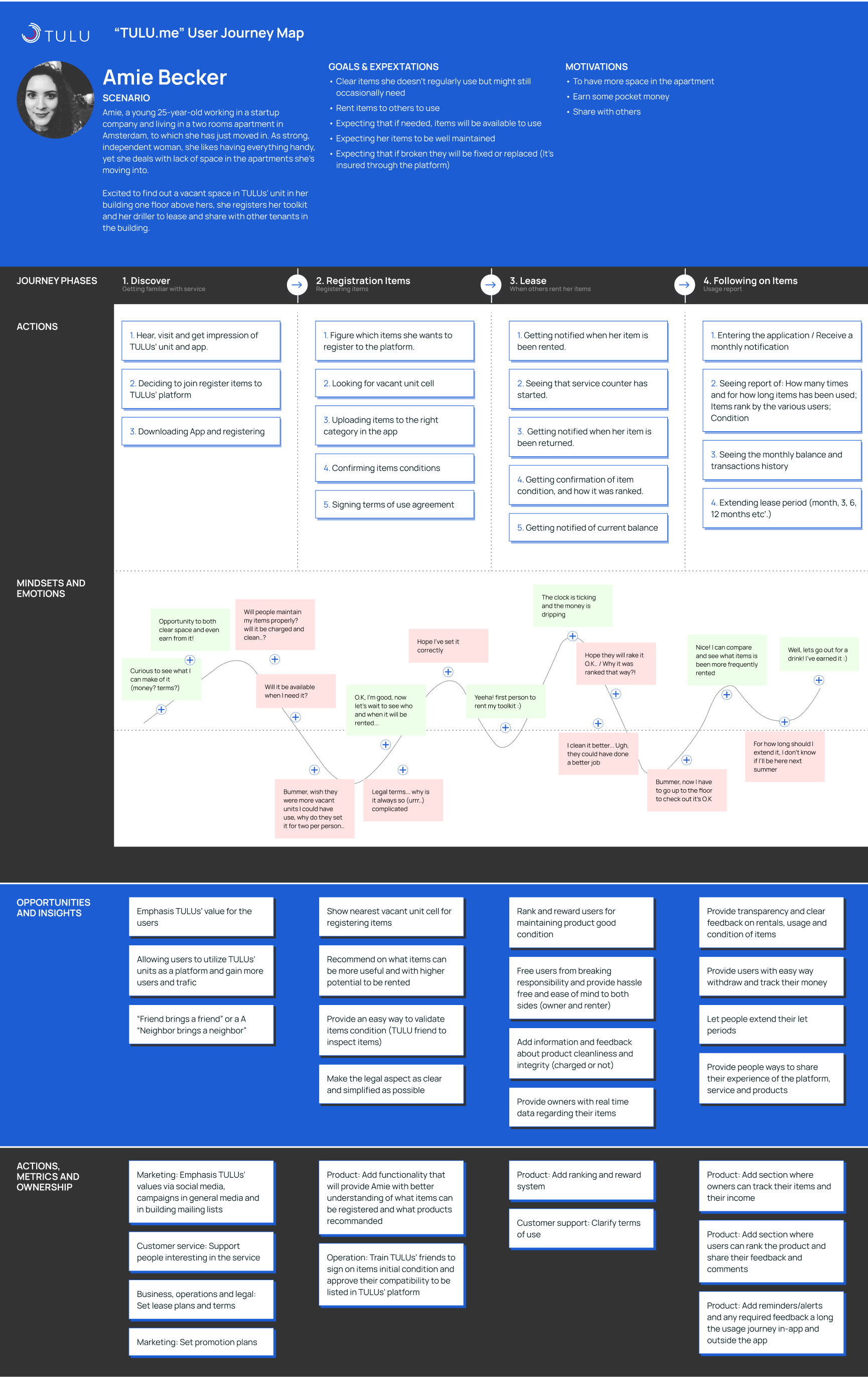
- Journey mapping
Develop
- Address trust concerns
- Promote platform accountability
- Two-sided model concept
Deliver
- TULU.me concept
- App prototype
- Future: pilot & WOZ testing
Literature Review: the psychology of sharing
We started by understanding the behavioural and social psychology of sharing economies: why people resist sharing, what ownership represents emotionally, and what conditions make shared-use services work in practice.
Survey: 150+ residents across the US and Netherlands
A clear pattern emerged: people who already owned similar items were the least likely to use TULU. The service was not competing with those who had nothing. It was competing with ownership itself.
Interviews: 6 qualitative sessions
The interviews brought out the emotional and social layers behind the survey data: hygiene concerns, the weight of ownership as a status symbol, worries about availability, and a recurring pattern where people acknowledged the benefits of sharing and still chose not to.
Competitive analysis
We analyzed how Uber, Airbnb, and urban micro-mobility services approach trust, growth, and marketing. The full competitive picture is in the Market Behavior section below.
Research Limitations
Working within a two-week timeframe and at a distance from where TULU actually operates were the natural limitations of this project. We worked to make the most of both, but were transparent with TULU about the impact on depth: we recommended deepening the research, building a prototype, and running a pilot before fully committing to the proposed direction.
Market Behavior
What others do, and what we can learn from it
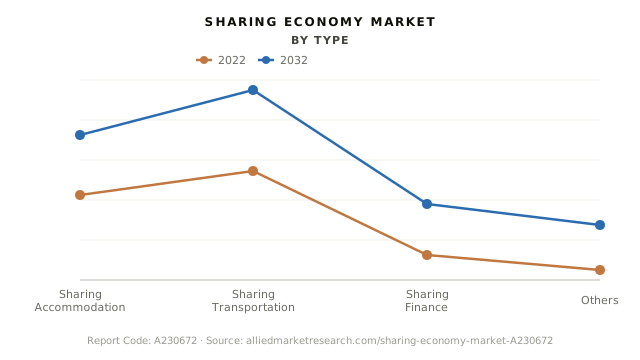
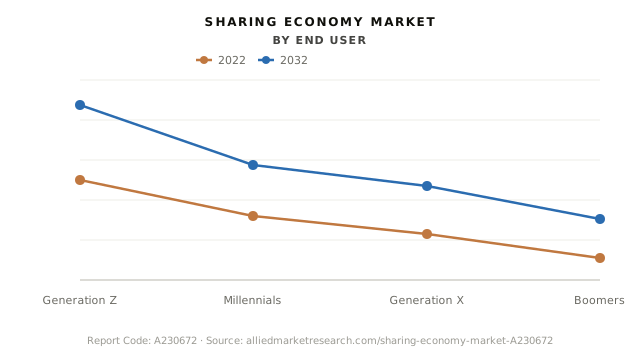
The sharing economy competitive market is well-known for transportation services like Uber, urban scooter rentals, and real estate ventures like Airbnb. None of the companies we researched offer in-building appliance rentals, meaning TULU operates in a space with no direct competitors.
A significant disadvantage for these services, including TULU's lesser-known in-building offerings, is marketing. Unlike scooter services, which benefit from high visibility and extensive advertising, TULU has relied primarily on word-of-mouth and in-house event marketing. Given tenant demographics and online habits, social media stands out as an untapped promotional channel. We also drew from how Uber builds user trust through its rating model, and that became a direct input into what we proposed for TULU.
Key Findings
Learning of People's Concerns About Sharing
Ownership is identity, not just convenience
"I don't really like to borrow things from my friends or from people, generally."
"When TULU opened, I started using their items until I got my own."
"I bought all my own stuff, so I don't have to rent anything."
A Dyson isn't just a vacuum. For many residents, owning one represents self-sufficiency and a degree of social status. TULU was asking people to give something up that carried more weight than it might seem.
Hygiene anxiety
Post-pandemic sensitivity to using items others have touched, especially appliances that come into contact with food or skin.
No accountability
When borrowing from others, there is no shared understanding of who is responsible if something goes wrong. That informal arrangement was enough to keep many people away.
Availability uncertainty
Residents worried the item they needed simply wouldn't be there when they needed it. When reliability is in doubt, the whole convenience argument falls apart.
The rational paradox
People acknowledged the cost savings and environmental benefits of shared use, and yet their behaviour didn't reflect it. Knowing the right thing and doing it are not the same.
The Solution
TULU.me - A convergence of interests
We proposed a fundamentally different model: let residents share their own items through TULU's infrastructure. The people who weren't using TULU precisely because they already owned everything could become the platform's best contributors.
When "I already own this" becomes "I could earn from this," the dynamic shifts. The same behaviour that kept people away from TULU becomes the reason to join it.
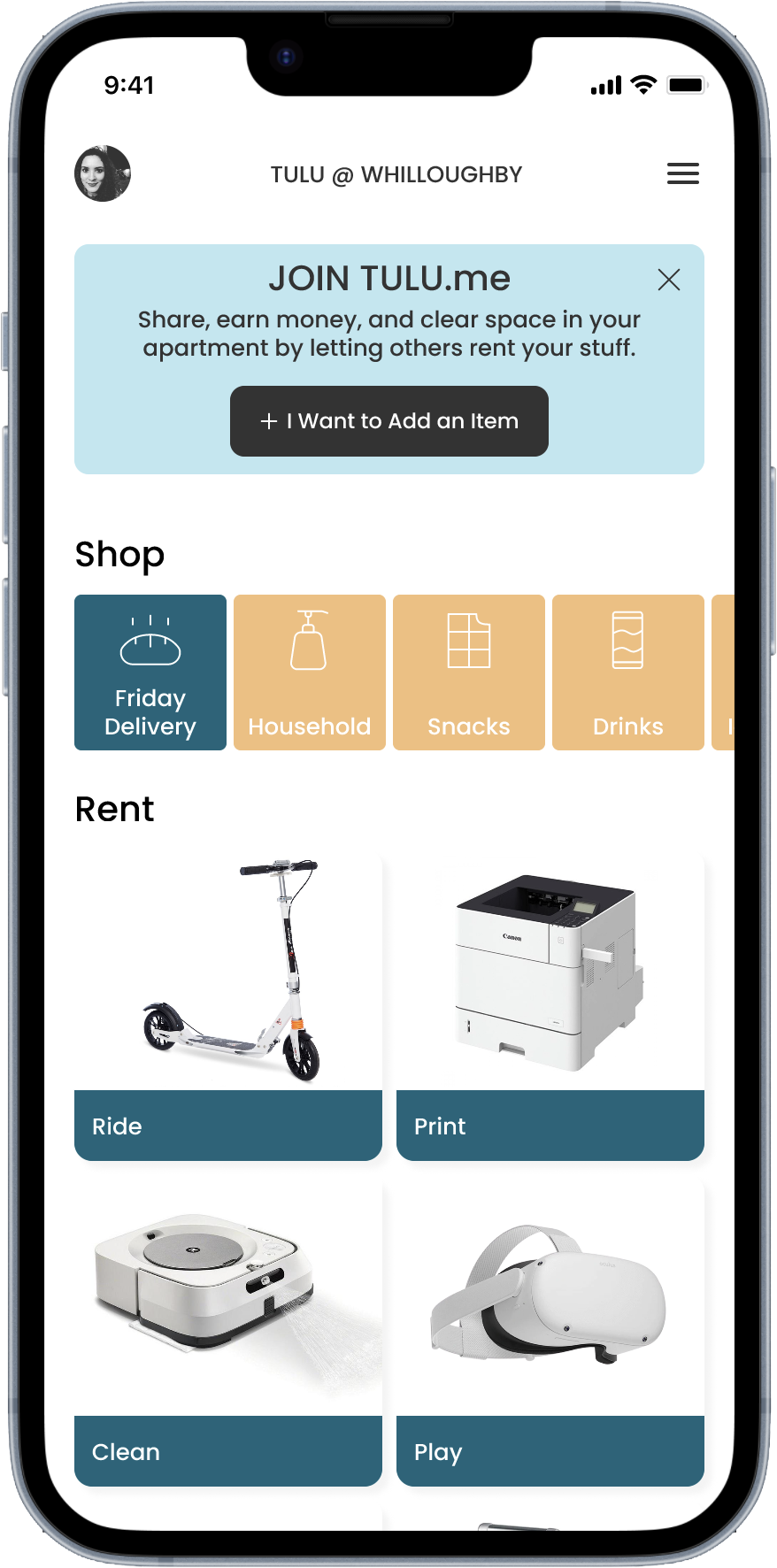
Browse shared items nearby
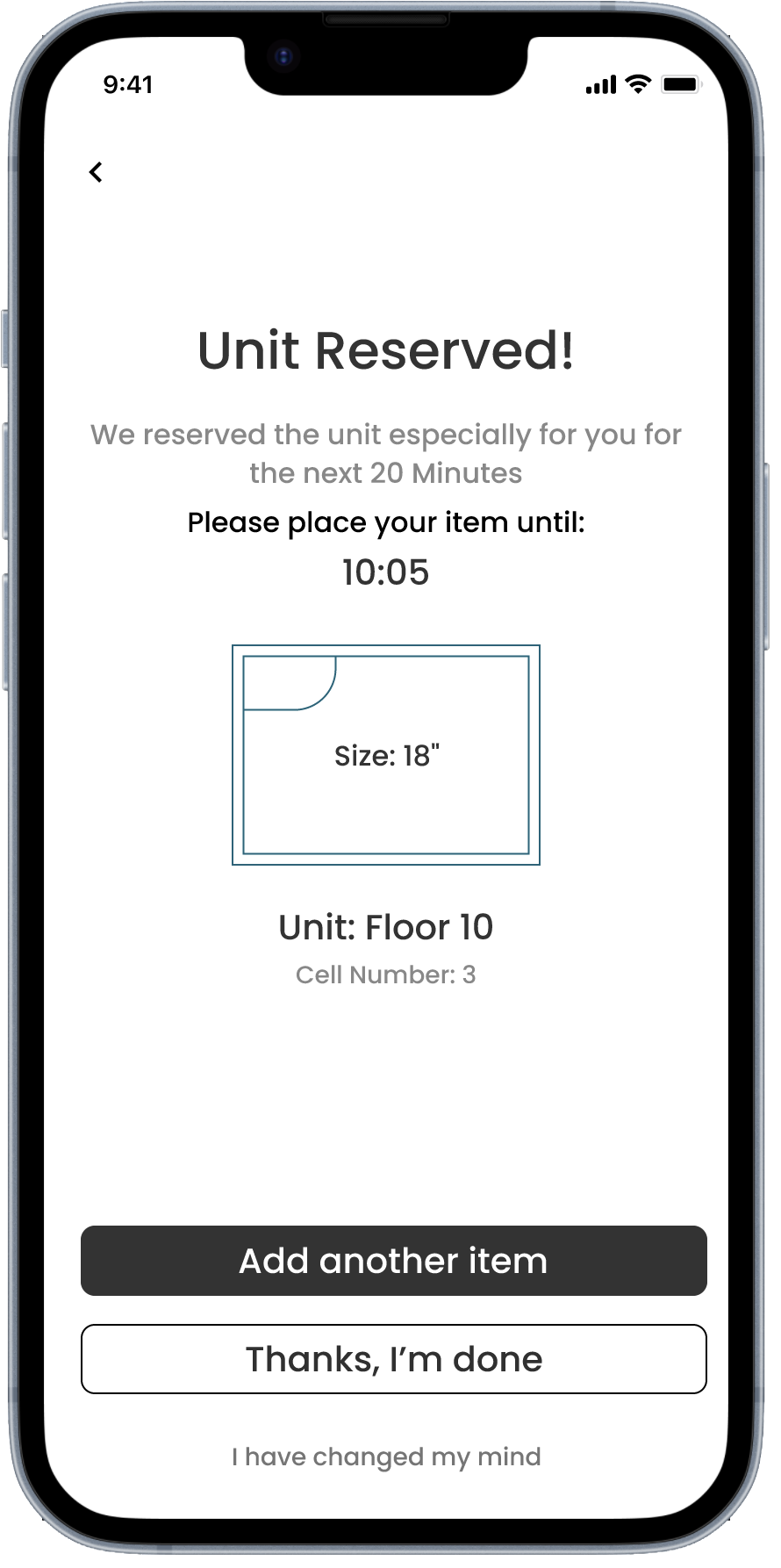
Confirmed reservation with accountability
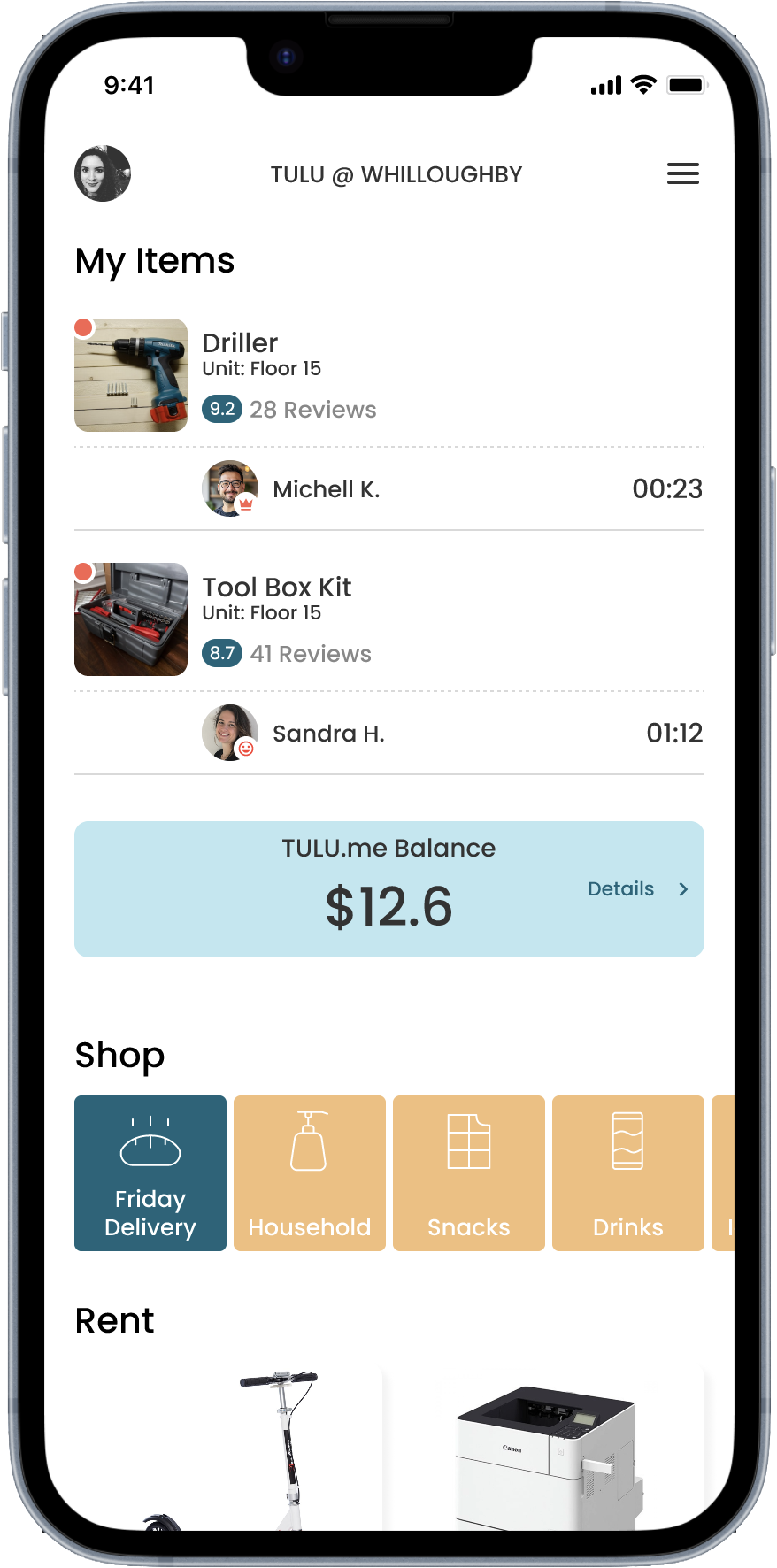
List your own items to earn
These screens are a directional prototype, not a tested solution. As noted in the Research Limitations, we recommended a pilot and further testing before full adoption.
App flow walkthrough
Who it works for
For residents who own
Monetise idle items, free up storage space, and earn some extra income, while keeping full control over what they share and when.
For residents who borrow
A wider inventory, peer ratings, and a formal rental agreement through TULU that addresses the trust concerns that kept people away.
For TULU
A larger inventory without additional investment in stock. People who previously had no reason to engage with TULU now have one.
For the story
The sustainability angle becomes something people choose and act on, rather than something they're told about. The sense of community comes from actual sharing, not from marketing.
Results
A Lifestyle Choice for Sustainable, Community-Focused Urban Living
The "TULU and Me" add-on is designed to bring in the residents who previously had no reason to engage. People who resisted renting because they already own everything now have the option to list their items and earn from them. TULU manages the trust layer through ratings and formal agreements, which addresses the concerns that kept people away in the first place. The sustainability story becomes something users live, rather than just something they are told about.
On the product level, the app gives residents direct control over what they share and what they earn, with a reservation flow and rating system that directly addresses the accountability concerns that came up in the research. For TULU, the model adds inventory without adding investment, generates better data on how residents actually use the service, and builds a community around real interactions rather than messaging.

Takeaways
Listen, Listen, and Listen
Working fast with limited time and resources pushed us back to basics. Four things stood out from this experience: